
Thermal mass first. Passive solar second.
A Biotecture building is a passive solar building made of natural and upcycled materials, such as earth-packed tires. It can be fully or partly off-grid, and in any climate it can supply its own electricity, drinking water, sewage treatment and food.
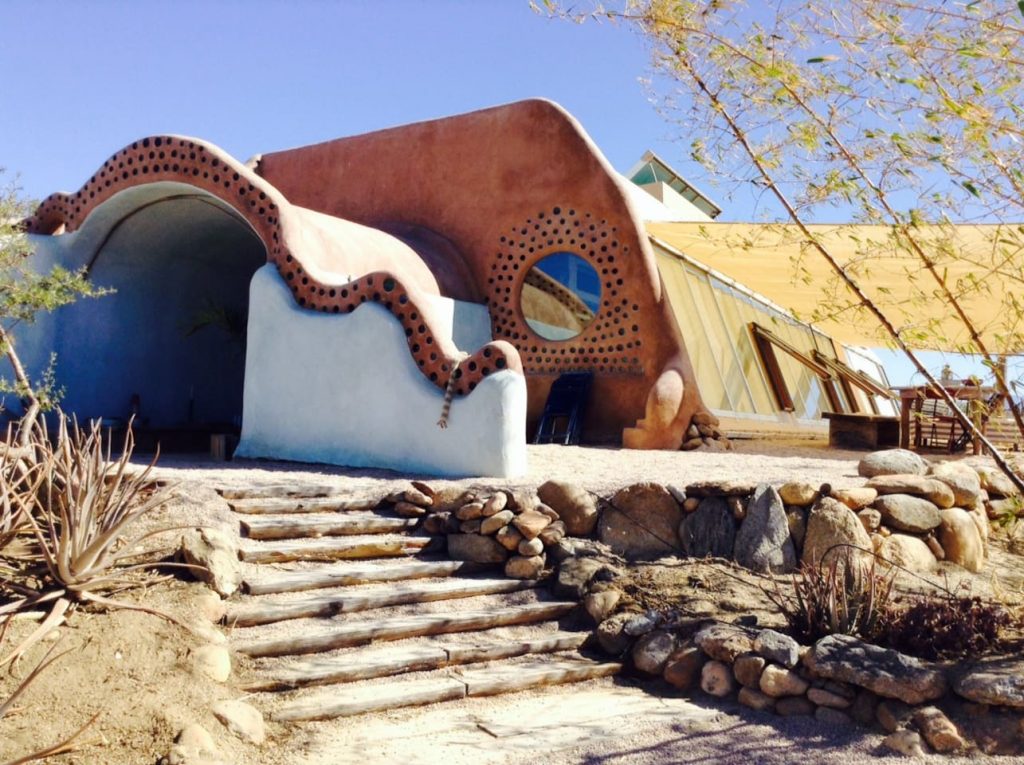
Whatever temperature goes in, the walls hold.
The earth is a thermal battery that delivers temperature without wires or pipes; the sun is a power plant that does the same. A Biotecture building is tight and trades heat only with those two, so it stays comfortable year round, even on a lot that can’t face the ideal 13.5° east of south.
- 01
Heating + cooling
Warm in winter and cool in summer with little or no utility bill and no fossil fuel.
M-500 - 02
Electricity
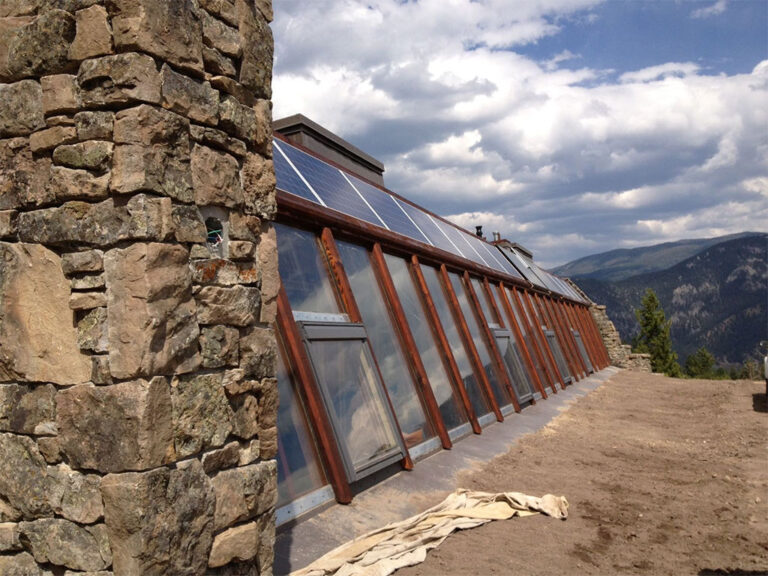
A prepackaged solar or wind power system with battery storage, plus biodiesel, micro hydro or grid-intertie as other sources.
E-200 - 03
Catch water
Rain and snowmelt caught from the roof and used four times. About half the fresh water of a conventional building, with city water as an optional backup.
P-300 - 04
Wastewater
Indoor and outdoor treatment cells reuse all household sewage for food and landscaping, with no pollution of aquifers. Toilets flush with treated greywater that doesn’t smell.
W-400 - 05
Natural + recycled materials
The building as an assemblage of by-products and local, naturally occurring materials: earth, tires, bottles, cans and timber.
S-600 - 06
Food
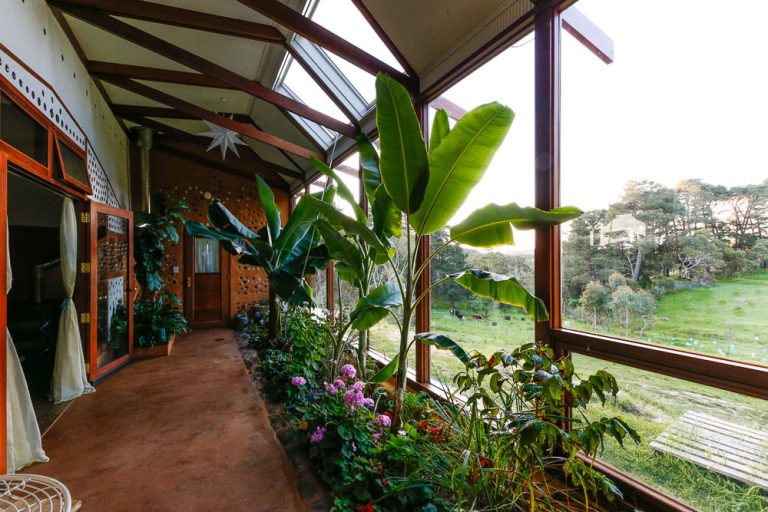
The greywater planters hold hundreds of gallons from sinks and showers, and grow fresh produce through the winter inside an interior greenhouse.
W-400
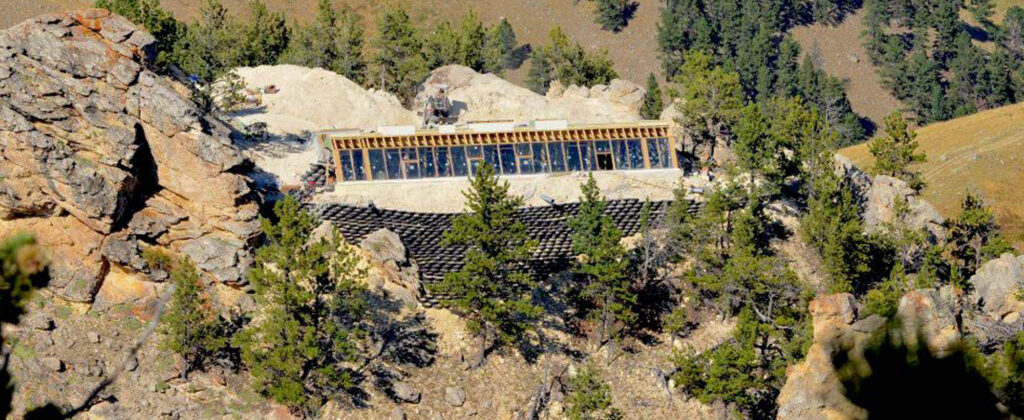
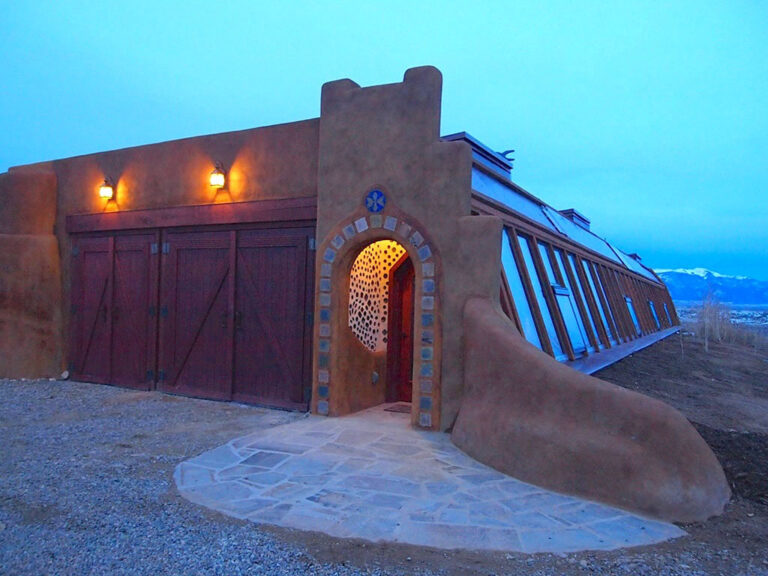
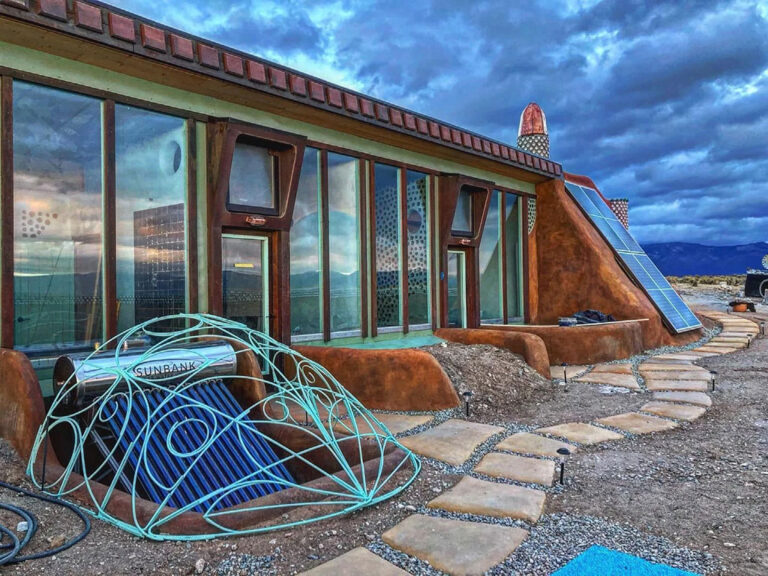
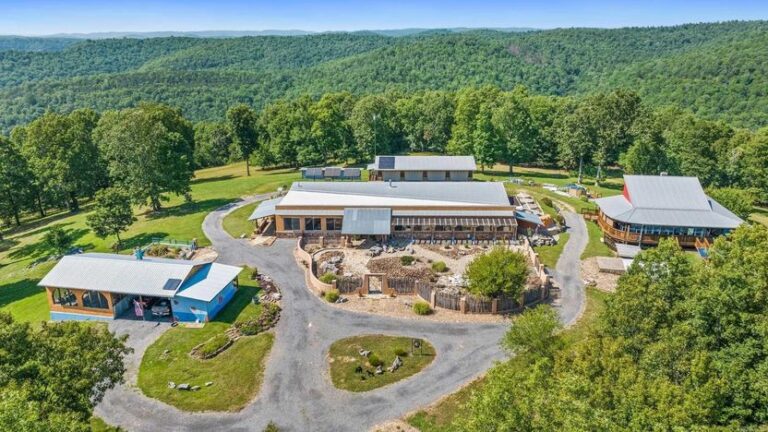
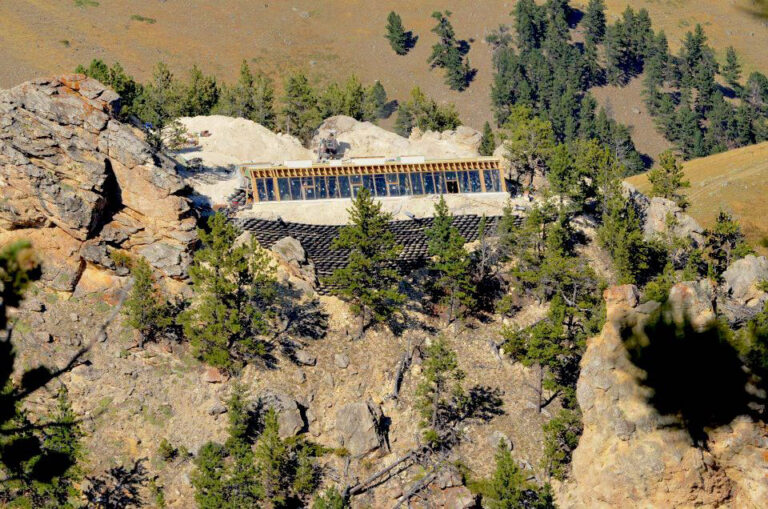
Montana to Adelaide.
The same principles, built in cold, hot, wet and dry climates.

Biology + architecture.
Biotecture brings living systems and ecological principles into the design of buildings, so they work with nature rather than around it, and go past sustainability toward regeneration.
- 01Living systems
Plants, soil biology and wildlife are part of the building: greywater planters, green roofs and living walls that clean air and water and add habitat.
- 02Materials
Recycled, renewable and local materials, less waste, and less impact from sourcing and manufacturing.
- 03Passive design
Daylight, natural ventilation, mass and insulation do the work that mechanical heating, cooling and lighting do elsewhere.
- 04Water
Rainwater harvesting, greywater reuse and efficient irrigation cut consumption and runoff.
- 05Regeneration
Regenerative agriculture, permaculture and ecological restoration built into how the site is designed and run.
The off-gassing question.
“The risk of living in an earthship tire building would be several orders of magnitude lower than the risk posed by activities such as living in a house with new carpet, eating peanut butter, driving a car, or smoking cigarettes.”
Tires in a Biotecture wall are packed solid with earth, buried in mass and sealed under plaster, away from sunlight and air. They are structure, not finish.
See the engineering behind rammed-earth tire walls, including field tests of friction, bearing and lateral load.
Permitted, then built.
We produce construction and permit drawing sets for Biotecture, passive house and other green buildings, and in most cases can provide engineer-stamped drawings. We draw for sites anywhere in the world and permit and build across the country.
Design and construction each have their own contract, with one firm carrying the project from the first sketch to move-in.


Start with the site.
Tell us where it is and what you want the building to do. We design and build across the country and around the world.