
Gypcrete—short for gypsum concrete—is a self-leveling floor underlayment commonly used in apartments, condos, and commercial buildings. It shows up frequently in radiant-heated floors, sound-rated assemblies, and fast-paced construction schedules.
In eco-building and off-grid design circles, gypcrete often sparks debate. Some see it as an efficient, modern solution; others see it as incompatible with natural, moisture-resilient construction.
The truth is more nuanced.
Like most materials, gypcrete is neither good nor bad by default. It is a tool—one that performs extremely well in some conditions and fails badly in others. Understanding why is essential if you care about durability, health, and long-term resilience.
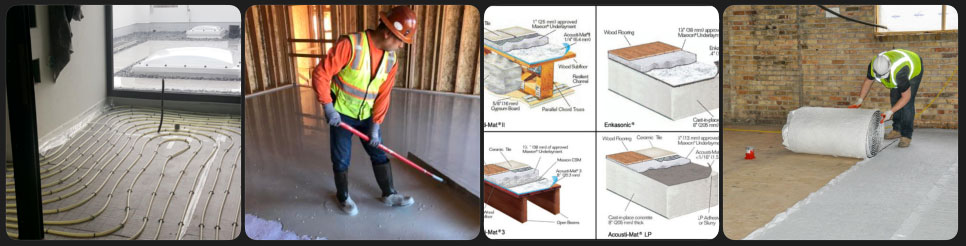
What Gypcrete Actually Is
Gypcrete is a gypsum-based cementitious underlayment, not Portland cement concrete. It is made from:
-
Gypsum (calcium sulfate)
-
Fine sand or aggregate
-
Water
-
Flow and curing additives
It is poured in a liquid state and self-levels, typically at ¾″–1½″ thickness, over wood subfloors or acoustic mats.
Once cured, gypcrete becomes a dense, non-structural layer intended to:
-
Create a flat floor surface
-
Encapsulate radiant heat tubing
-
Improve sound and fire performance
It is never a finished floor and never a structural slab.
Where Gypcrete Performs Exceptionally Well
Radiant Heating Systems
Gypcrete’s flow characteristics allow it to fully surround hydronic tubing, creating excellent thermal contact. This results in:
-
Even heat distribution
-
Reduced hot and cold striping
-
Lower required water temperatures
In cold climates or energy-efficient buildings, this can significantly improve comfort and reduce energy use.
Sound Control in Multi-Unit Buildings
One of gypcrete’s strongest advantages is acoustic performance. When paired with resilient underlayments, it dramatically reduces:
-
Footfall noise
-
Vibration transfer
-
Airborne sound between units
This is why it is nearly ubiquitous in apartments and condos.
Fire Resistance
Gypsum contains chemically bound water that releases as steam during fire exposure. This property helps floor assemblies meet fire-rating requirements without additional layers.
Speed and Construction Efficiency
Because it is pumped and self-leveling:
-
Large areas can be poured quickly
-
Minimal finishing labor is required
-
Floors are extremely flat and ready for finishes
In large projects, this can reduce labor costs and scheduling pressure.
The Critical Weakness: Moisture
Here is the point that matters most for eco-builders and off-grid designers:
Gypcrete is moisture-sensitive.
Unlike Portland cement concrete, gypsum softens when exposed to prolonged moisture. If gypcrete gets wet repeatedly or stays damp, it can:
-
Lose compressive strength
-
Powder or deteriorate
-
Create conditions for mold in adjacent assemblies
This makes it fundamentally incompatible with uncontrolled moisture environments.
Common risk zones include:
-
Bathrooms and kitchens without excellent detailing
-
Slab-over-crawlspace floors
-
Earth-integrated or earth-bermed buildings
-
Off-grid homes with variable humidity and ventilation
This is not a flaw—it is a material property. Problems arise when the property is ignored.
Structural Reality Check
Gypcrete provides zero structural value.
It does not:
-
Strengthen floors
-
Replace subfloor thickness
-
Improve load-bearing capacity
All structure must be handled by the framing below. Treating gypcrete as anything other than a topping layer is a design error.
Finish Flooring Compatibility
Because gypcrete is gypsum-based:
-
Nail-down hardwood floors are generally incompatible
-
Special primers and adhesives are required
-
Floating floors, tile (with membranes), and glue-down finishes work best
Skipping manufacturer-approved primers is one of the most common causes of flooring failure over gypcrete.
Gypcrete Through a Regenerative Lens
From an ecological perspective, gypcrete lives in a middle ground.
Pros
-
Lower embodied energy than full concrete slabs
-
Enables efficient radiant heating
-
Minimal waste during installation
Cons
-
Industrial gypsum extraction
-
Poor tolerance for moisture variability
-
Limited recyclability once installed
For this reason, gypcrete is often appropriate in urban, multi-unit, wood-frame buildings, but less suitable for:
-
Earthships
-
Natural or earthen buildings
-
Off-grid homes with passive ventilation and seasonal humidity swings
In those contexts, alternative assemblies often perform better over decades, not just at inspection.
If You Use Gypcrete, These Rules Matter
If gypcrete is part of your project, these are non-negotiable:
-
Excellent Moisture and Vapor Control
Gypcrete must stay dry for its entire service life.
-
Proper Subfloor Preparation
Clean, sealed, and structurally sound before pouring.
-
Tested Assemblies Only
Follow manufacturer or UL-tested floor assemblies—no improvisation.
-
Finish Flooring Coordination
Flooring installers must understand they are working over gypsum, not concrete.
-
Clear Expectations
Gypcrete is an underlayment—not structure, waterproofing, or a finished surface.
The Bottom Line
Gypcrete is not a shortcut and not a universal solution. Used in the right context, it can deliver excellent comfort, sound control, and efficiency. Used in the wrong context, especially in moisture-variable, earth-integrated, or off-grid buildings, it can become a long-term liability hidden beneath the floor.
Good ecological design is not about rejecting modern materials outright. It is about matching material properties to real environmental conditions.
The right question is never “Is gypcrete good or bad?”
It is: “Does this material belong in this building, in this climate, with this lifestyle?”
That question, and the honesty to answer it, defines truly regenerative design.


Leave A Comment
You must be logged in to post a comment.